
After Sealing: When You Can Walk, Drive, and Move Furniture Back
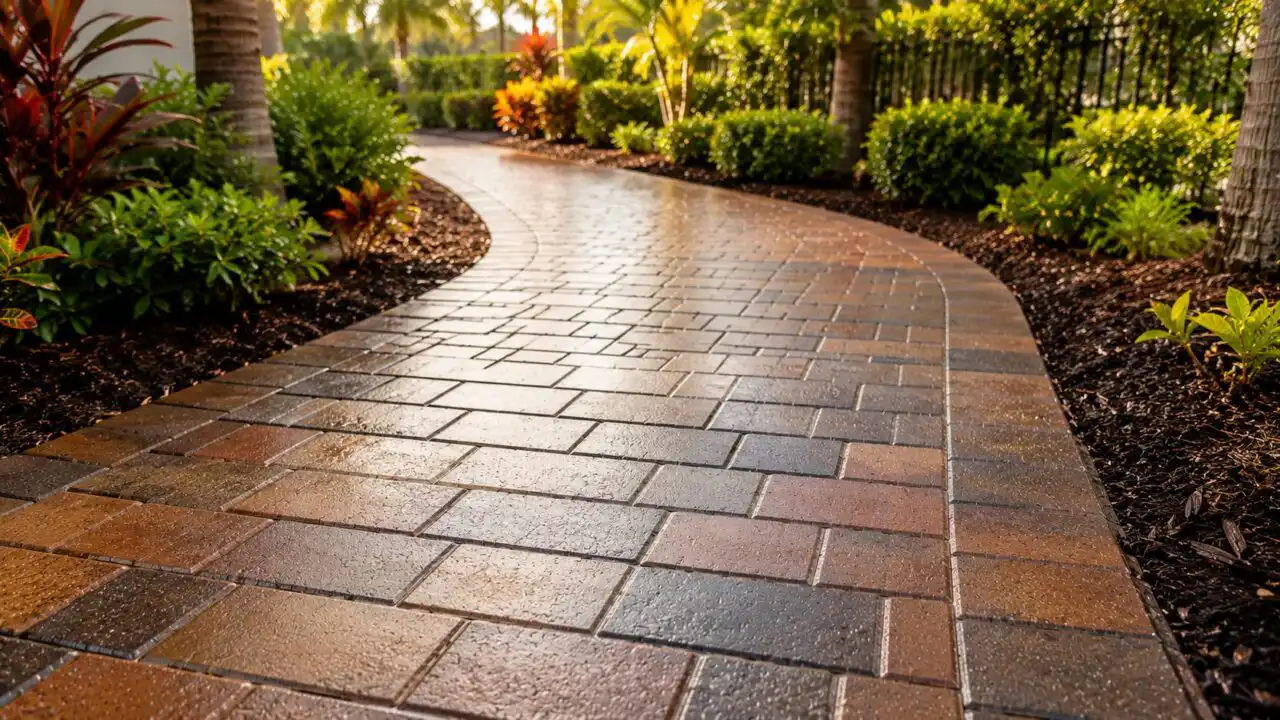
You just had your pavers professionally sealed and they look incredible. Now comes the hardest part for most homeowners: staying off them while the sealer cures. Understanding paver sealer cure time, and respecting it, is what protects the finish you just paid for.
Sealing is not finished the moment the last coat goes down. The sealer needs time to harden and bond before the surface can take foot traffic, vehicles, and furniture again. Here is the timeline to follow and why each step matters.
Paver Sealer Cure Time at a Glance
As a general rule, you can walk on freshly sealed pavers after about 24 hours, and you can drive on them or move furniture back after about 48 hours. Those two windows, 24 hours for foot traffic and 48 for vehicles and heavy items, are the simplest way to remember the timeline.
For that first day the sealer is still setting up. Walking on it too soon can leave footprints, scuffs, or dull spots, and it can press dirt into a surface that has not fully hardened. Giving it a full 24 hours lets the top layer firm up so it can handle normal foot traffic without marking. These are guidelines for typical conditions, and a professional will give you specific timing for your particular job.
At Wet Seal Paver Solutions, our team has spent years protecting paver surfaces across the Tampa Bay area.
Why Vehicles and Furniture Need Longer
Cars, grills, planters, and patio furniture put far more weight and pressure on the surface than footsteps do. Driving or setting heavy items on pavers before the sealer has cured can leave tire marks, indentations, or stuck on impressions that are difficult to undo. Waiting the full 48 hours protects against that, and for very heavy vehicles a little extra time is even better.
Most cure time problems come from a few avoidable mistakes: pulling cars back in the same evening, dragging furniture across the surface instead of lifting it, leaving irrigation on a timer that mists the pavers overnight, or letting pets cross fresh sealer. None of these are obvious in the moment, which is why we leave clear instructions after every job so the curing window is respected.
What Affects How Fast Sealer Cures
Cure time is fairly consistent, though a few conditions can shift it slightly. Warm, breezy weather helps the sealer set a little faster, while cooler temperatures can slow it down. Either way, the 24 and 48 hour marks are reliable minimums to plan around, not deadlines to rush.
Weather right after sealing matters too. Once the sealer has had a couple of hours to set, light rain, dew, and humidity will not hurt it, but heavy rain within that first short window, before it has set, can cloud or mar the finish. This is exactly why we plan jobs around the forecast and build in dry time, and if conditions turn we will tell you whether the surface needs any attention before normal use.
The number of coats plays a role too. A proper job usually involves a flood coat followed by one or two additional coats, and each layer needs time before the next can set. More coats give better protection but can extend the overall cure window slightly, which is another reason the timeline varies from one driveway or pool deck to the next. We factor all of this in when we tell you exactly when the surface is ready for normal use.
How to Know It Has Fully Cured
Once cured, the surface should feel firm and dry, not tacky or soft, and it should not mark when you press on it. The finish will look even and consistent across the whole area. If the pavers still feel tacky after the expected window, they simply need a little more time before normal use.
Respecting cure time is the final step of a sealing job done right, and it is just as important as the prep and the application. A perfectly applied seal can still be ruined in the first two days by traffic that came too soon. Once it has set, the protection lasts, and you are back on the roughly two year resealing schedule that keeps Florida pavers in good shape.
It also helps to keep the pavers clear while everything settles. Hold off on dragging hoses, garbage cans, or lawn equipment across the fresh surface for the first few days, and keep sprinklers from misting the area until the sealer has hardened fully. The finish is at its most vulnerable in those early hours, and a little care during that short stretch is what lets it cure into the durable, even surface you are paying for.
Why a Professional Job Cures Right
When we seal pavers, we plan the timing, the number of coats, and the weather so the surface cures evenly and on schedule, and we tell you exactly when it is safe to walk and drive on them. That guidance is part of the service, and it is one more reason it is important to hire a professional rather than guess. It is the kind of detail our paver sealing service handles on every job.
Thinking about getting your pavers sealed? Call us at 813-809-4440 or request a free estimate and we will walk you through the whole process, curing included.