
Why You Shouldn’t Pressure Wash Sealed Pavers
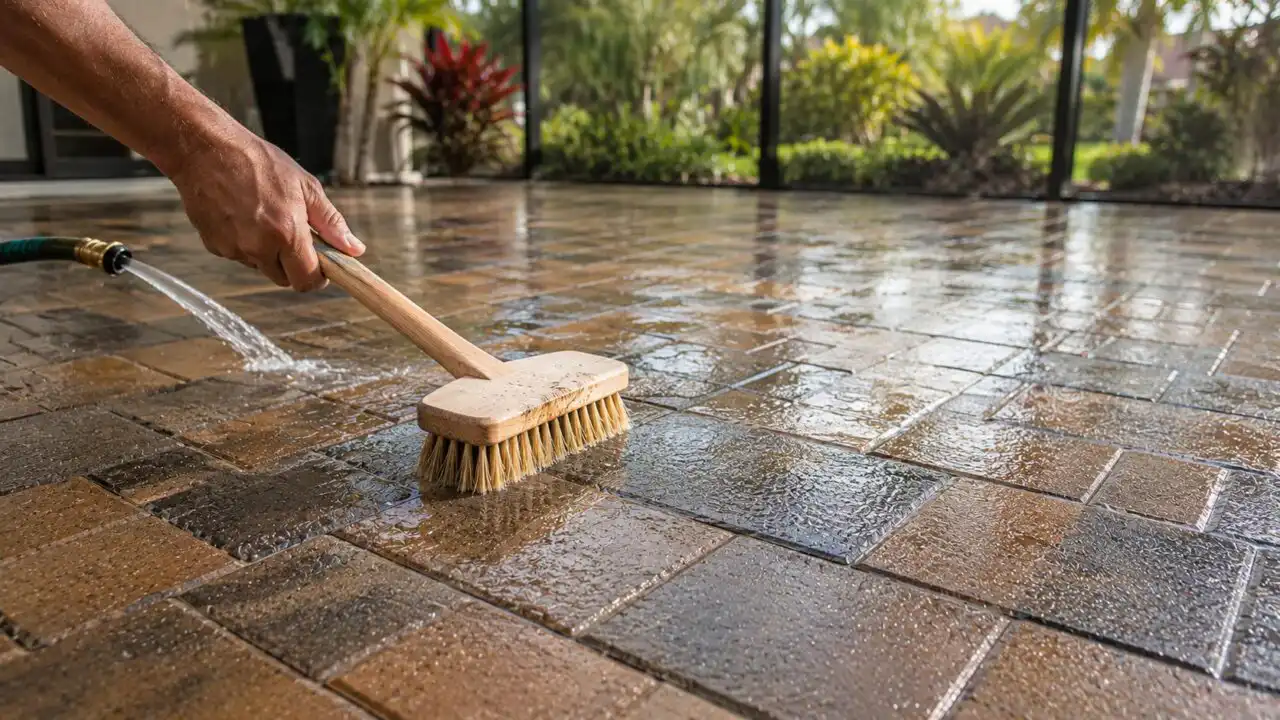
Pressure washing feels like the obvious way to clean pavers, and for bare, unsealed surfaces our pressure washing service has its place. But once your pavers are sealed, reaching for a pressure washer can quietly undo the work you paid for. If you have ever wondered whether you can pressure wash sealed pavers, the honest answer is that you really should not.
Here is what high pressure actually does to a sealed surface, the better way to keep your pavers clean, and when it is time to call in a professional instead.
Can You Pressure Wash Sealed Pavers?
It is not recommended. High pressure water is strong enough to strip sealer right off the surface and blast the joint sand out from between the pavers, and those are the two things a good sealing job is meant to protect. So while a pressure washer might make the pavers look clean for a moment, it can leave them worse off than before you started.
The damage is not always obvious at first. A quality sealer forms a protective layer that shields pavers from stains, fading, and moisture, and a pressure washer, especially at close range or with a narrow tip, can cut straight through it. Once the sealer is broken in spots, you lose protection unevenly, which leaves blotchy areas and exposes the pavers to the very stains and wear you were trying to prevent.
At Wet Seal Paver Solutions, our team has spent years protecting paver surfaces across the Tampa Bay area.
What It Does to the Joint Sand
The sand packed between your pavers does far more than fill gaps. It locks the pavers in place and keeps them from shifting, and high pressure water washes it out fast. Once the joints are empty, pavers can loosen, rock underfoot, and let weeds and water work their way in.
Replacing lost sand and re-stabilizing the joints is a much bigger job than a simple cleaning, and it often means a full service to clean, re-sand, and reseal the whole area. That is a lot of cost and effort to undo damage that a gentle cleaning never would have caused in the first place.
The Right Way to Clean Sealed Pavers
Sealed pavers do not need brute force to stay clean. For routine cleaning, a diluted chlorine or bleach solution, a stiff brush, and low pressure water from a garden hose will lift dirt, mildew, and most everyday grime. The chlorine handles organic growth like mold and algae, the brush does the scrubbing, and the low pressure rinse carries it all away without harming the sealer or the sand.
For tougher spots, the answer is still not more pressure, it is the right product and a little patience. Green and black mildew respond well to a chlorine mix and a brush, while oil and rust are stubborn and may only lighten rather than disappear. A gentle cleaning every few weeks, with a more thorough wash a couple of times a year, keeps the surface looking good without ever putting the seal at risk.
It also pays to clean a little more often rather than waiting until the pavers look bad. Light, regular cleaning keeps grime from building into the kind of mess that tempts people to reach for high pressure in the first place. A few minutes with a hose and brush every couple of weeks beats a single aggressive cleaning that puts the whole seal at risk.
When the Pavers Really Need More
Sometimes a gentle clean is not enough, and that is fine, it just is not a job for a pressure washer. If the pavers are heavily soiled, the sealer is failing, or the joint sand is already gone, the right fix is a professional service that cleans, re-sands, and reseals in the correct order. Trying to power wash your way out of a failing seal usually just speeds up the damage.
It helps to remember what is actually doing the work. Gentle cleaning keeps the surface looking good, but it is the sealer underneath that protects the pavers from stains, fading, and shifting. Every time that sealer and sand get stripped early, you shorten the life of the job and move up your next full service, so protecting the seal is what keeps you on the normal roughly two year resealing schedule instead of paying for repairs in between.
There is also a simple test for whether a cleaning will be enough. If water still beads on the surface and the joints are full, a gentle wash will do the job. If the water soaks straight in and the sand is gone, the seal has already worn through, and no amount of cleaning will bring back protection that is no longer there. That is the point where resealing, not scrubbing, is what the pavers actually need.
Leave the Heavy Lifting to a Professional
When sealed pavers need more than a gentle wash, that is exactly the kind of work to hand off. A professional knows how to clean, restore, and reseal without destroying the protection in the process, which is why it is important to hire one rather than risk a pressure washer on a sealed surface. It is the kind of work our paver sealing service does every week.
Not sure how to clean or restore your pavers safely? Call us at 813-809-4440 or request a free estimate for honest advice and a plan that protects your investment.